People with intellectual disability are experiencing increasing rates of life limiting conditions but face multiple barriers to accessing quality palliative care. Further, there is currently no specific guidance or model of palliative care in Australia for services on how to meet the needs of people with intellectual disability.
What we have done
Between 2021 and 2024, 3DN completed a mixed-methods research examining access to and the impact of palliative care for people with intellectual disability. The linked data studies and stakeholder consultations provide an enhanced understanding of the unique needs of people with intellectual disability with life-limiting conditions and have informed guidance on tailoring palliative care services for this group.
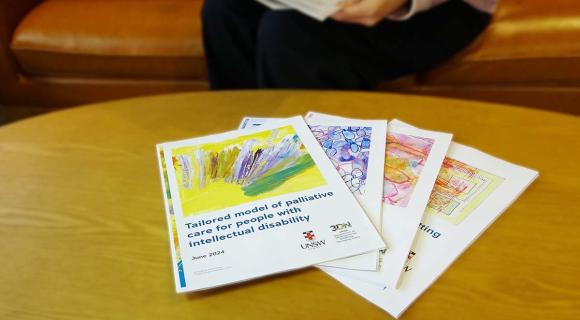
Collective findings were translated into the co-design of a tailored model of care/guidelines and supporting toolkits and resources. These guidance documents aim to improve the quality of palliative care service delivery to people with intellectual disability.
Key project activities included:
- Analysis of palliative care service use by people with intellectual disability in New South Wales (NSW)
- Stakeholder consultations with people with intellectual disability, supporters (including family and paid/unpaid support workers) and palliative care professionals
- An international Delphi survey with experts in palliative care for people with intellectual disability to develop consensus on the components of an optimal model of palliative care for people with intellectual disability in Australia.
Findings from these activities were translated into:
- A tailored model of palliative care (opens in a new tab) for people with intellectual disability to guide all health professionals and service managers involved in the provision of palliative care
- Recommendations on improving national data collection about people with intellectual disability receiving palliative care services (within the model of care document)
- The development, trial and preliminary evaluation of a suite of accessible information resources for people with intellectual disability, their supporters and health professionals to support the model of care
- Two supporting toolkits on improving palliative care for people with intellectual disability
- An Easy Read Story (opens in a new tab) for people with intellectual disability about a made-up person (called Joe) getting good palliative care.
Project lead: Julian Trollor
Project team: Rachael Cvejic, Janelle Weise, Preeyaporn Srasuebkul, Amanuel Hagos, Olivia Burton, Peiwen Liao, Simone Reppermund, Claire Vajdic, Meera Agar, Janeane Harlum, Rebecca Strutt, Maria Heaton, Tracey Szanto, Vanessa Evans, David Currow, and Richard Chye.
Project funding: This project was funded by the Australian Government Department of Health and Aged Care.

