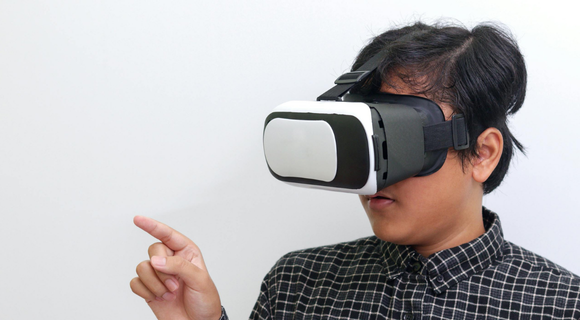
Can digital technology help make healthcare more accessible for people with intellectual disability?
People with intellectual disability face barriers to healthcare, including health information that is hard to understand and appointments that are not adapted to their needs.
The National Roadmap for Improving the Health of People with Intellectual Disability identifies emerging technologies as one way to reduce these barriers.
Emerging technologies such as virtual reality and artificial intelligence are evolving quickly, and healthcare systems are adopting them. Understanding how these technologies are being used to support the health of people with intellectual disability can guide the development of tools that meet their needs.
Our scoping review - Emerging digital technologies to improve health outcomes in people with intellectual disability: A scoping review - examined how technologies such as virtual reality, gaming consoles and mobile apps have been used to support the health of people with intellectual disability. The review included 36 studies published over the past decade.
Most studies reported improvements in outcomes such as fitness, balance and anxiety, and showed the tools were safe to use across a range of health areas. Most research focused on physical activity and motor skills. Only one study examined access to healthcare, and few addressed mental health.
The authors call for future tools to be co-designed with people with intellectual disability and developed for use at home and in the community.
You can read the full report - Emerging digital technologies to improve health outcomes in people with intellectual disability: a scoping review, by Stefan Michalski, Tobias Loetscher, Rachael Cvejic and Julian Trollor - here.

