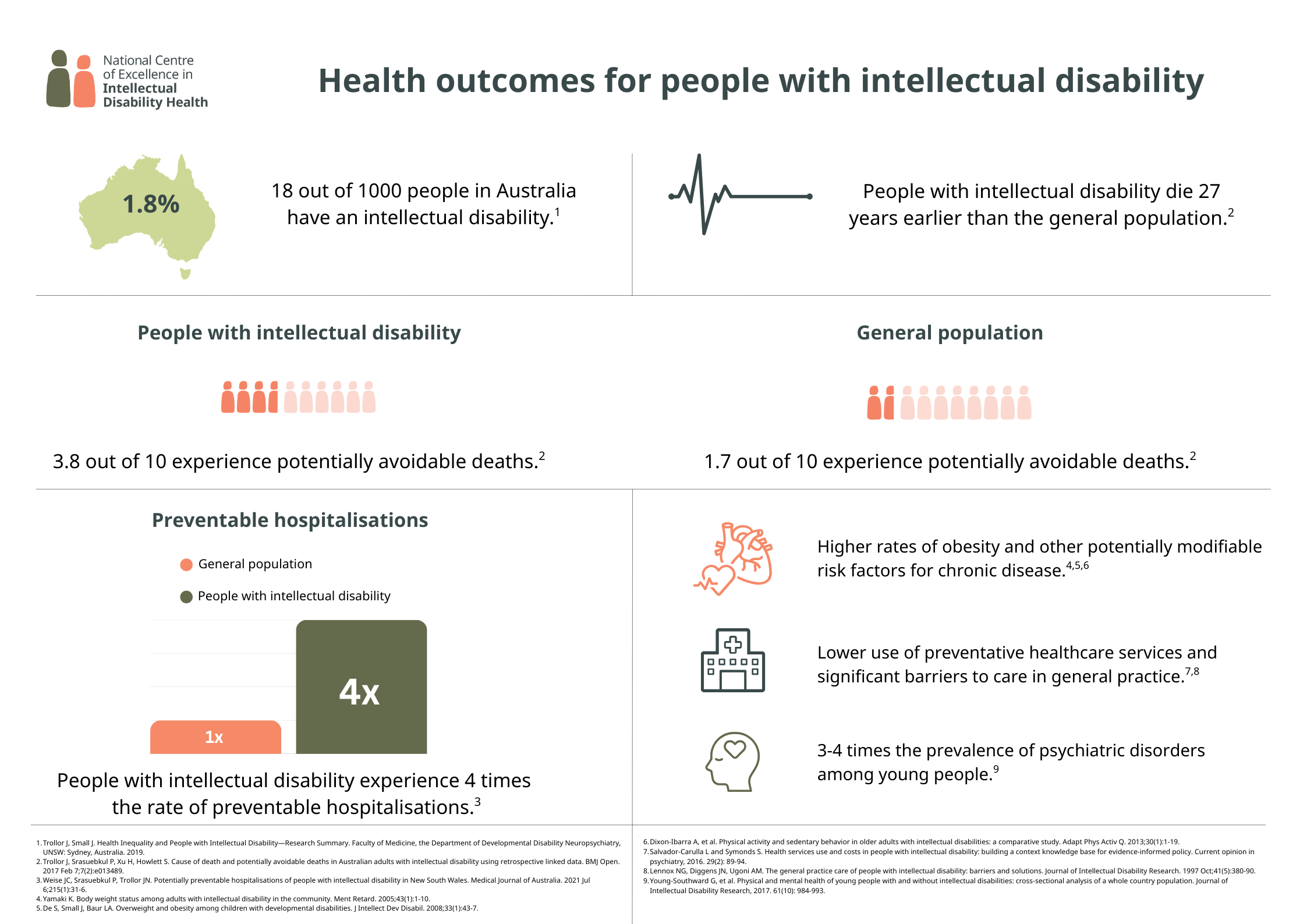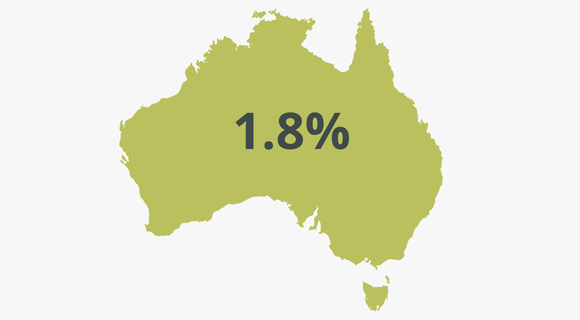
In Australia, 1.8% of people have an intellectual disability. Research from the Centre shows these people have some of the poorest health outcomes in Australia.
In Cause of death and potentially avoidable deaths in Australian adults with intellectual disability using retrospective linked data, authored by Julian Trollor, Preeyaporn Srasuebkul, Han Xu and Sophie Howlett, it was found that people with intellectual disability die, on average, 27 years earlier than the general population.
Another study, Potentially preventable hospitalisations of people with intellectual disability in New South Wales, authored by Janelle C Weise, Preeyaporn Srasuebkul and Julian N Trollor, revealed that people with intellectual disability experience 4 times the rate of preventable hospitalisations than people without intellectual disability.
This body of work highlights the pressing need to improve health care for people with intellectual disability.
Systemic Advocacy
The Centre's Driving Change team works to improve health care for people with intellectual disability by driving systemic advocacy in health care across Australia.
The team have put together this snapshot that includes the above findings and highlights the inequitable health outcomes that people with intellectual disability experience.
This Driving Change team use this information when advocating for change in the healthcare system.