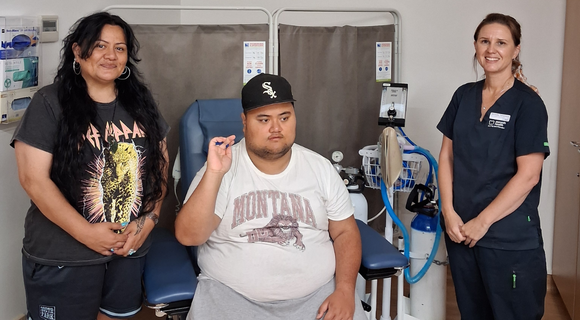
People with intellectual disability often need extra support to have vaccinations, blood tests, dental care and other medical procedures. Some people also need sedation to help them feel safe and complete these procedures.
Many people cannot get the support or sedation they need. As a result, they miss important health care. This contributes to poorer health and health inequalities for people with intellectual disability.
We held a roundtable with the Department of Health, Disability and Ageing. People with intellectual disability, family members, clinicians, researchers, advocates and government representatives took part.
Participants shared their experiences of getting support and sedation. They also discussed services that work well in some parts of Australia and the barriers that stop these services being available more widely.
Participants agreed that people should receive the least restrictive support that meets their needs. This is called a tiered approach.
A tiered approach would mean:
- Providing supportive environments and reasonable adjustments first
- Using medication or sedation only when needed
- Using general anaesthetic only when other options are not suitable.
What needs to happen
Participants agreed that more need to be done across the health system to put the tiered approach in place. It was also agreed that state and territory health agencies should be the main focus.
To support this, we would need:
- A nationally agreed model of care that describes different levels of support and sedation.
- Better evidence about how many people need these services.
- Advice on the costs of providing appropriate services.
- A way to measure whether services are working.
- Guidance to help services prepare funding proposals.
- Real examples that show the health risks when support and sedation are not available, and the health and cost benefits when they are. This includes savings from preventing illness and treating health problems earlier.
- People with disability and family members who are willing to share their experiences.
Next steps
Participants at the roundtable agreed on the following actions.
- The Centre and DHDA will continue this work together, with ongoing input from people with intellectual disability, families, clinicians and researchers.
- The Centre will establish a small working group to develop a tiered model of care for state and territory health agencies. The model will support people with intellectual disability who need help to access health care. It will also consider other groups with similar support and sedation needs.
- DHDA, working with the Centre, should improve access to support and sedation in general practice by:
- working with Primary Health Networks and Local Health Districts, starting with the four Primary Health Networks involved in the Primary Care Enhancement Program
- encouraging health professionals to complete training that improves communication and reasonable adjustments for people with intellectual disability.
- DHDA and the Centre should work with state and territory governments through existing national health and disability groups to encourage action on this issue.
- The Centre and government agencies should improve data about support and sedation needs. This includes collecting information about:
- how many people need support and sedation
- the costs of providing these services and potential savings for the health system
- the potential improvements in people's health and quality of life.

